Your cart is empty
Tax included and shipping calculated at checkout


Drawer menu
Tax included and shipping calculated at checkout

How the world's most precious fragrance ingredient became one of the defining elements of premium interior design.
Not because of a striking sofa or a spectacular chandelier, but because they evoke a feeling that stays with you. The atmosphere is calm, layered and unmistakably personal. Light falls softly across natural stone. Bronze reflects a warm glow. Fine fabrics invite you to slow down. And somewhere in the background, almost imperceptibly, a fragrance completes the experience.
Among all fragrance families, few possess the same ability to transform a space as oud.
Often described as liquid gold, oud has been treasured for centuries across the Middle East and Asia. Once reserved for royal courts, sacred ceremonies and the homes of nobility, it has gradually found its place in contemporary European interiors—not as a passing trend, but as a natural expression of refined living.
Today, designers increasingly view fragrance as another layer of interior architecture. Materials influence how we perceive light. Textiles soften acoustics. Carefully chosen scents shape the emotional identity of a room.
Oud belongs to this language of atmosphere.
Unlike bright citrus compositions or delicate florals that introduce freshness, oud creates depth. It lingers quietly, bringing warmth, texture and presence without overwhelming a room. It is a fragrance chosen not to impress for a moment, but to become part of everyday life.
At Archideco Interior Gallery, home fragrance is curated with the same attention given to furniture, lighting and decorative objects. The collection brings together European fragrance houses whose craftsmanship, design philosophy and olfactory identity complement contemporary interiors—from CULTI MILANO and Euthalia Fragrances to Ginori 1735, Baobab Collection and Ladenac Milano. This approach reflects Archideco's philosophy of creating interiors as cohesive systems, where every element contributes to the overall atmosphere.

Few fragrance ingredients have acquired such legendary status.
Oud originates from the heartwood of the Aquilaria tree. When the tree naturally develops a protective resin in response to environmental stress, the wood gradually transforms into one of the rarest aromatic materials in the world. The process can take decades, making genuine oud exceptionally scarce and highly valued.
For centuries, oud has been woven into the cultural traditions of the Arabian Peninsula, India and Southeast Asia. It perfumed palaces, accompanied religious ceremonies and symbolised hospitality. Guests entering an important home would often be welcomed with the rich smoke of burning oud chips—a gesture of respect and generosity that remains part of many cultures today.
Contemporary perfumers interpret oud differently.
Rather than reproducing its traditional intensity, European fragrance houses often pair it with floral notes, citrus, incense or precious woods to create compositions that feel sophisticated, balanced and remarkably versatile.
The result is an oriental fragrance that feels equally at home in a modern apartment overlooking the city, a contemporary villa, a boutique hotel or an executive office.
This evolution explains why oud has become one of the defining fragrance families in premium home perfumery.

Fragrance influences the way we perceive a space just as profoundly as colour, texture or light.
Warm oriental compositions naturally complement interiors built around tactile materials and timeless craftsmanship. Walnut cabinetry, smoked oak flooring, brushed brass, bronze, travertine and richly textured fabrics all share a similar visual language—one of depth rather than contrast.
Oud extends this atmosphere. Rather than competing with the interior, it quietly reinforces it.
This is one reason why designers frequently introduce oriental fragrances into spaces inspired by quiet luxury, contemporary European architecture and boutique hospitality. Instead of creating an obvious sensory statement, oud becomes part of the room's character—subtle enough to live with every day, distinctive enough to be remembered.
It is equally suited to private residences and professional environments. In a living room, it creates warmth for entertaining. In a study, it enhances concentration through its grounding, resinous profile. In a hospitality setting, it leaves guests with an emotional memory that extends beyond visual design.
The growing appreciation for sensory interiors has elevated fragrance from a decorative accessory to an integral part of the design process. Increasingly, architects and interior designers consider scent alongside materials, lighting and acoustics when shaping the overall experience of a space.

One of the most fascinating aspects of today's niche fragrance industry is how differently each maison interprets oud.
Some compositions remain faithful to traditional Middle Eastern perfumery, rich with smoke, leather and resins. Others introduce unexpected contrasts—rose, raspberry, coffee or citrus—to create fragrances that feel lighter, more architectural and easier to integrate into contemporary homes.
This diversity is particularly evident across the collections available at Archideco.

Euthalia Fragrances approaches oud through storytelling and emotion. The Italian maison is known for creating fragrances inspired by places, including the official scent of Genoa and a collaboration with the Veneranda Fabbrica del Duomo to develop the official fragrance of Milan Cathedral. Its oriental creations combine exceptional raw materials with elegant Italian restraint.

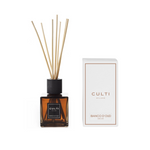
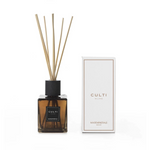
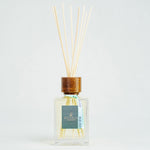
CULTI MILANO pioneered the modern reed diffuser and continues to define minimalist fragrance design. Its sculptural bottles, maple wood caps and carefully balanced compositions have become icons of contemporary interiors. Rather than presenting oud as something heavy or dramatic, CULTI integrates it into sophisticated compositions that feel refined, airy and unmistakably Italian.

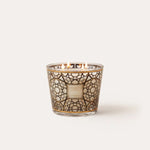
Baobab Collection transforms fragrance into decorative art. Every candle is hand-poured, every glass vessel individually crafted, while fragrances developed in Grasse combine traditional perfumery with contemporary olfactory design. Even before being lit, many Baobab pieces function as sculptural objects within the interior.

Ginori 1735 extends centuries of porcelain craftsmanship into fragrance through collections that unite design, art and scent. Candles, incense holders and diffuser vessels are conceived as collectible objects, making fragrance part of a broader decorative narrative rather than a standalone product.

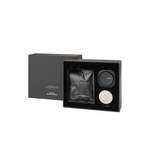
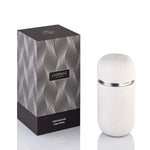
Ladenac Milano, whose fragrance heritage dates back to 1884, interprets oriental accords with remarkable elegance. The brand combines artisanal candle-making techniques, natural cotton wicks and carefully selected raw materials to create fragrances that become part of everyday rituals instead of dominating them.

Each house speaks its own olfactory language.
Together, they demonstrate that oud is not a single fragrance but an entire universe of interpretations—ranging from luminous and floral to smoky, resinous and profoundly architectural.
Part 2 — The Best Premium Oud Reed Diffusers, Designer Candles, Ginori incense rituals, Ladenac perfumes and expert recommendations for every room